Strengthens local governance systems by enabling citizens, Panchayats, and state institutions to make decisions rooted in data.
Strong local institutions are the backbone of a functional Democracy.
Our mission is to build resilient, inclusive, and future-ready rural economies that uphold dignity, sustainability, and shared prosperity for both people and the planet.
Strengthening Institutions for Inclusive Development
Building an India of Informed, Empowered & Responsible Citizens
Get Involved
Contribute your knowledge. Shape stronger public systems.
Collaborate to scale evidence-based democratic change.
Learn from the field. Build skills for democratic leadership.
Contribute your time, skills, and passion to strengthen governance.
Join us in strengthening evidence-based, accountable governance.
Strengthens local governance systems by enabling citizens, Panchayats, and state institutions to make decisions rooted in data.
India’s democracy, though vibrant in spirit, faces deep systemic challenges that prevent citizens from truly exercising power and agency in governance. In any thriving democracy, evidence forms the bedrock of accountability and inclusion. The Research & Data Analytics Wing of RACLD strengthens local governance systems by enabling citizens, Panchayats, and state institutions to make decisions rooted in data.
Across India, data on development indicators often remains fragmented, outdated, or inaccessible to those who need it most — the government and local institutions responsible for implementation. RACLD bridges this gap by commissioning high-quality research, facilitating community-owned data systems, and building analytic capacity at the grassroots. Our approach goes beyond research for its own sake: we translate data into tools for planning, monitoring, and reform. Through participatory analytics, digital platforms, and evidence-based planning, we ensure that data is not just collected but owned, understood, and acted upon by communities themselves.
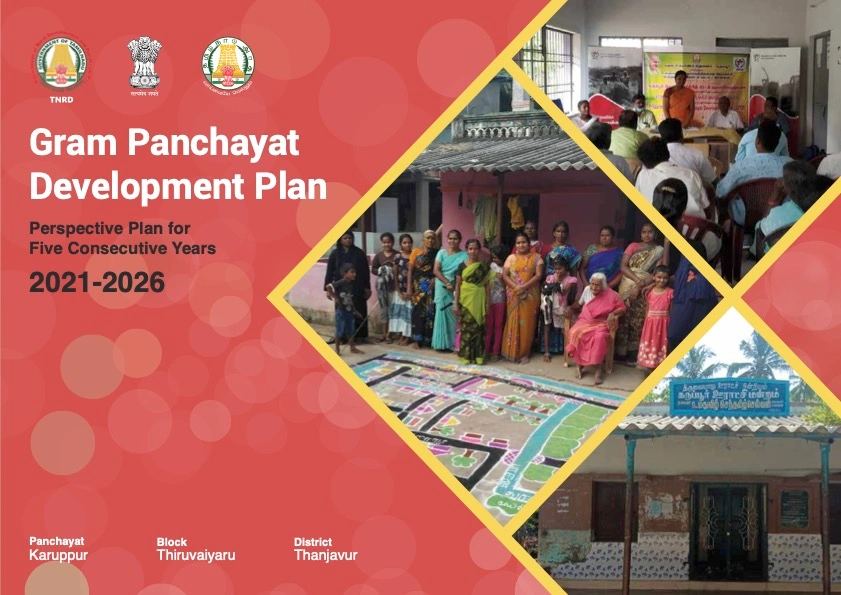
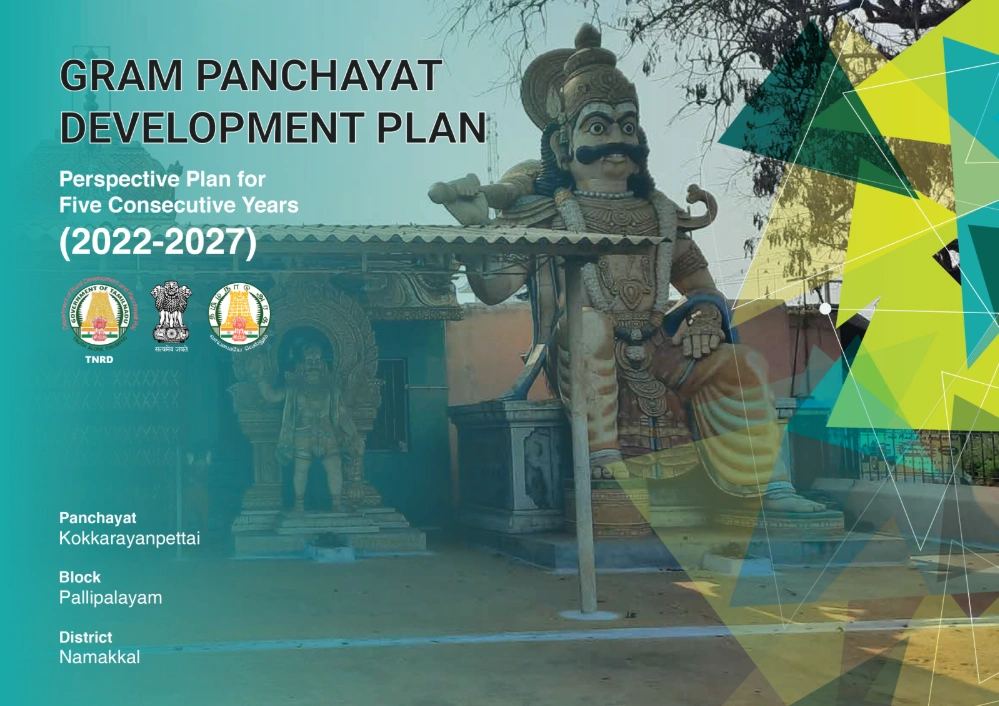
The Gram Panchayat Development Plan (GPDP) is a national mandate under Article 243G of the Constitution of India and the 73rd Constitutional Amendment. It empowers every Gram Panchayat to prepare an annual and prospective plan for economic development and social justice, aligning local priorities with state and national goals.
The GPDP integrates 29 sectors listed in the Eleventh Schedule – from health, sanitation, and education to livelihoods, environment, and social welfare ensuring that village development is comprehensive, data-driven, and inclusive.
Without a proper and participatory plan for the Panchayats, it is impossible for the Government to achieve meaningful rural development.
Development cannot be imposed from the top, it must emerge from the ground, reflecting the needs, priorities, and aspirations of local communities.
When Panchayats are left without clear plans, data, or resources, the result is fragmented interventions, underutilized funds, and disconnected programs that fail to strengthen local democracy.
For decades, local governance has suffered from two structural weaknesses: lack of granular, reliable data, and limited citizen participation in planning.
The GPDP process, when executed meaningfully, resolves both by creating a shared vision for the Panchayat, matching needs to resources, and prioritizing interventions through participatory processes.
RACLD has reimagined the GPDP as both a technical planning instrument and a citizenship exercise, a way for every villager to co-create their Panchayat’s future.
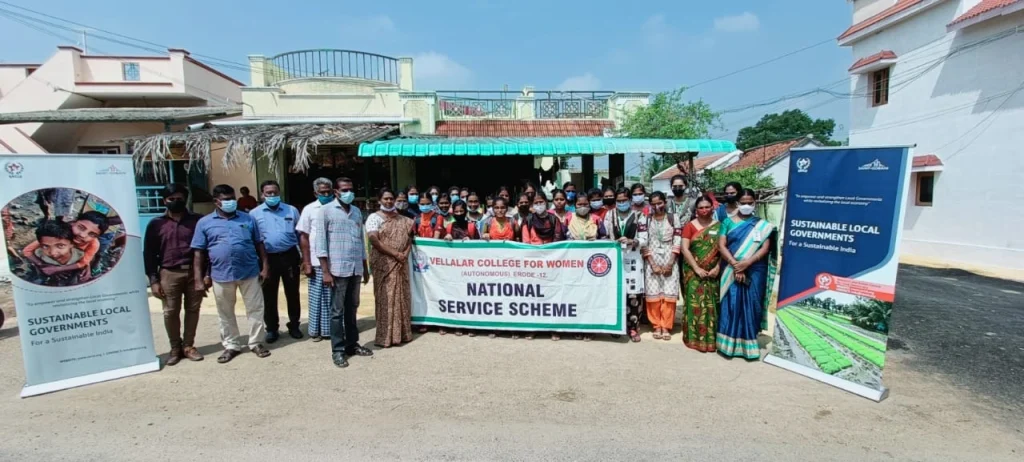
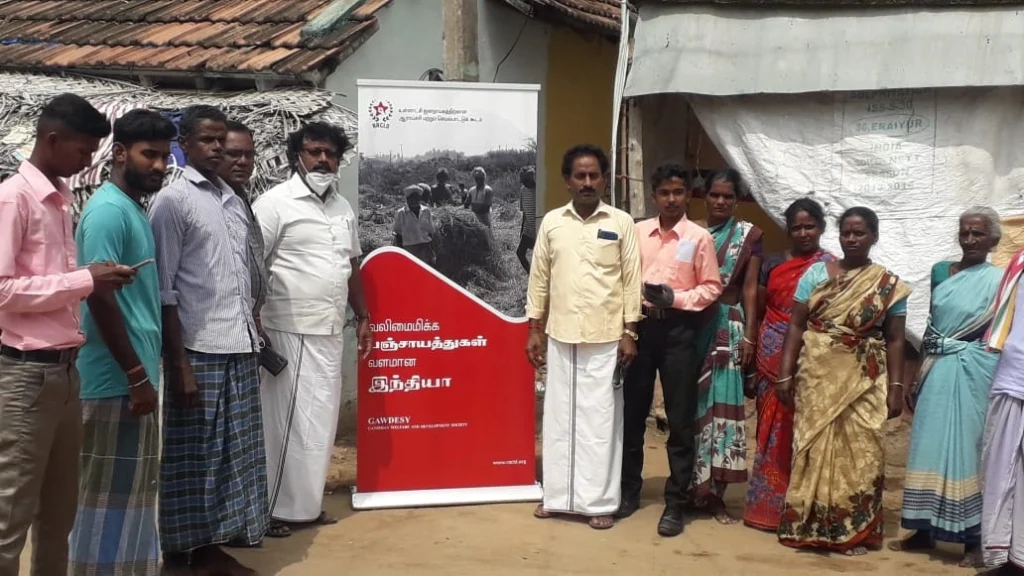
We begin with Gram Sabha awareness sessions, building understanding of GPDP’s purpose and encouraging every household’s participation.
Using both primary and secondary data, our field teams facilitate village, household, and individual surveys supported by digital platforms. Data sources include Mission Antyodaya, Census, SECC, and departmental datasets.
Through structured Gram Sabhas, the community collectively identifies priority needs and available resources – social, natural, human, and financial.
RACLD provides ongoing support to ensure implementation fidelity, transparency, and continuous data-driven evaluation of progress.
RACLD helps create and train Gram Panchayat Planning Facilitation Teams (GPPFTs) and Ward Planning Facilitation Teams (WPFTs) ensuring representation across gender, caste, and livelihood groups.
We support Panchayats in analysing collected data to prepare a Development Status Report (DSR) mapping gaps in sectors such as health, education, livelihoods, infrastructure, and social justice.
The GPDP is then drafted, integrating all line department schemes and ensuring convergence under the Panchayat’s leadership. The draft plan is presented in a Development Seminar and finalized by the Gram Sabha.
This comprehensive process ensures that every plan is evidence-based, inclusive, and implementable, positioning Panchayats as data-empowered local governments.
Data analysis is no longer an optional tool in democratic governance—it is a foundational pillar that ensures transparency, accountability, equity, efficiency, and citizen trust. In a complex democracy like India, where decisions affect millions across diverse geographies and socio-economic conditions, data-driven governance becomes the engine that keeps the democratic system fair, responsive, and future-ready.
Democratic institutions must make decisions that serve all citizens. Data analysis replaces assumptions with quantifiable evidence, enabling:
This helps transform democracy from opinion-based governance to science-driven governance
Good data makes government actions visible and understandable.
When citizens can “see the system through data,” democracy becomes trustworthy, participatory, and corruption-resistant. underutilized funds, and disconnected programs that fail to strengthen local democracy.
Data helps citizens understand:
Data converts passive populations into active participants, strengthening democratic culture and community oversight.
Data is the most powerful tool to identify who is left behind.
With data, governments can create targeted interventions to ensure democratic benefits reach the last mile.
Democracy demands not only making policies, but also measuring whether they work. Data analysis helps evaluate:
This continuous feedback loop strengthens democratic governance by ensuring agility, responsiveness, and learning.
With advanced analytics, governments can:
Data moves democracy from reactive to proactive, reducing suffering and enabling preventive action.
Data streamlines the functioning of democratic institutions:
The result is a faster, more accountable, more citizen-centric system.
In a democracy, justice must be fair, evidence-driven, and timely. Data analysis supports:
Data-based justice improves trust in democratic institutions.
Data-driven budgeting ensures:
It turns public finance into a strategic, accountable system, not an opaque administrative process.
In an era of misinformation, polarisation, and rapid change, data is key to:
Reliable data is the backbone of democratic stability and informed public discourse.
Data analysis is the heartbeat of a mature democracy. It ensures:
| SNo | Districts | Available Number of Panchayat | Total No of Panchayats | Percentage (%) |
|---|---|---|---|---|
| 1 | ARIYALUR | 61 | 201 | 30.35 |
| 2 | CHENGALPATTU | 86 | 359 | 23.96 |
| 3 | COIMBATORE | 83 | 228 | 36.40 |
| 4 | CUDDALORE | 140 | 683 | 20.50 |
| 5 | DHARMAPURI | 137 | 251 | 54.58 |
| 6 | DINDIGUL | 143 | 306 | 46.73 |
| 7 | ERODE | 137 | 225 | 60.89 |
| 8 | KALLAKURICHI | 89 | 412 | 21.60 |
| 9 | KANCHIPURAM | 54 | 274 | 19.71 |
| 10 | KANNIYAKUMARI | 41 | 95 | 43.16 |
| 11 | KARUR | 83 | 157 | 52.87 |
| 12 | KRISHNAGIRI | 156 | 352 | 44.32 |
| 13 | MADURAI | 120 | 420 | 28.57 |
| 14 | NAGAPATTINAM | 109 | 434 | 25.12 |
| 15 | NAMAKKAL | 120 | 322 | 37.27 |
| 16 | PERAMBALUR | 54 | 121 | 44.63 |
| 17 | PUDUKKOTTAI | 150 | 497 | 30.18 |
| 18 | RAMANATHAPURAM | 88 | 429 | 20.51 |
| 19 | RANIPET | 52 | 303 | 17.16 |
| 20 | SALEM | 168 | 343 | 48.98 |
| 21 | SIVAGANGA | 132 | 445 | 29.66 |
| 22 | TENKASI | 71 | 221 | 32.13 |
| 23 | THANJAVUR | 193 | 589 | 32.77 |
| 24 | THE NILGIRIS | 23 | 35 | 65.71 |
| 25 | THENI | 68 | 130 | 52.31 |
| 26 | THIRUVALLUR | 95 | 526 | 18.06 |
| 27 | THIRUVARUR | 122 | 430 | 28.37 |
| 28 | TIRUCHIRAPPALLI | 139 | 404 | 34.41 |
| 29 | TIRUNELVELI | 61 | 204 | 29.90 |
| 30 | TIRUPATHUR | 63 | 208 | 30.29 |
| 31 | TIRUPPUR | 116 | 265 | 43.77 |
| 32 | TIRUVANNAMALAI | 165 | 860 | 19.19 |
| 33 | TUTICORIN | 98 | 403 | 24.32 |
| 34 | VELLORE | 103 | 252 | 40.87 |
| 35 | VILLUPURAM | 134 | 693 | 19.34 |
| 36 | VIRUDHUNAGAR | 118 | 450 | 26.22 |
| TOTAL | 3772 | 12527 | 30.11 |